By Corey Sandler
If all goes to plan, we are currently out to sea, six weeks of sailing in the North Sea and the Baltic.
Part and parcel of any such trip, as I noted last month, are many other modes of transportation: planes, trains, automobiles, elevators, escalators, oh my.
Ups and Downs
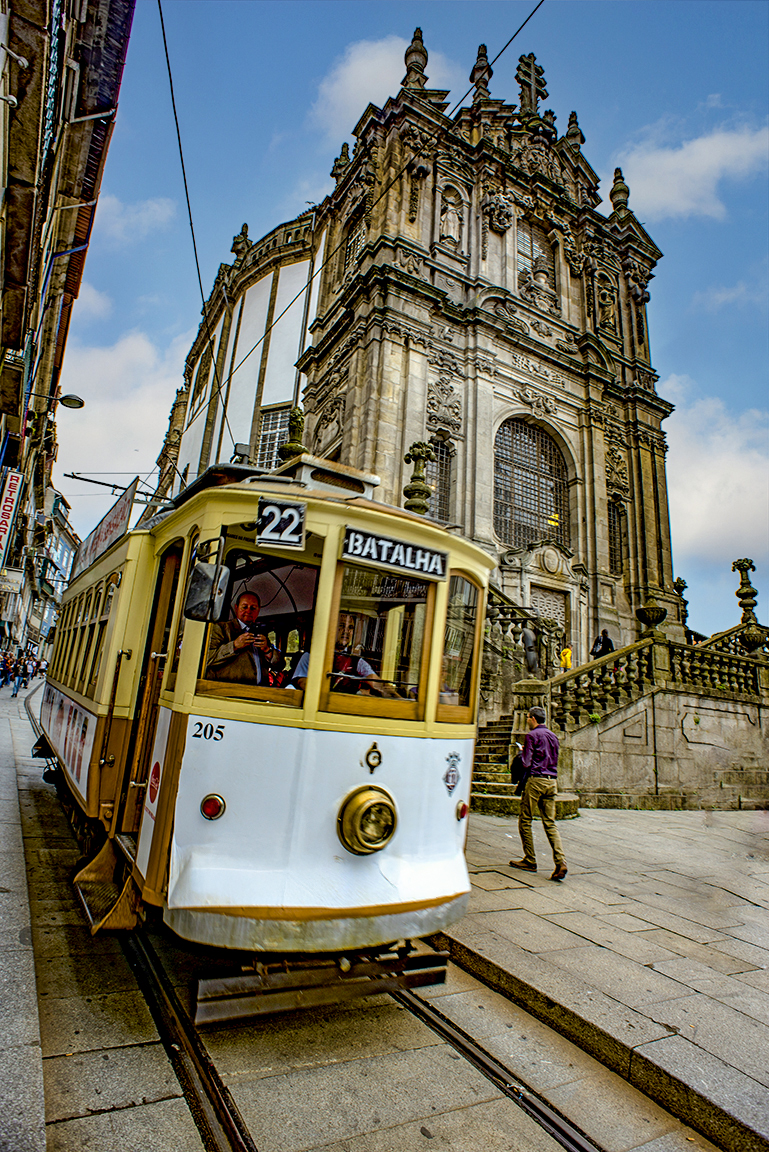
Portugal’s second city, Porto, has its ups and downs, a trait it shares with Lisbon.
The name is so simple and descriptive: it means “port” and the city fronts on the Atlantic Ocean and at the mouth of the Douro River which leads into Portugal’s wine country, famous for Port fortified wine.
A bit more complex is its formal name: the Ancient, Very Noble, Ever Loyal and Undefeated City of Porto.
Porto is on the north side of the Douro, with a sharp climb up from the river to the city proper. Across the Douro is the Vila Novo de Gaia. A set of handsome and very high bridges connect the two sides.
The Underground
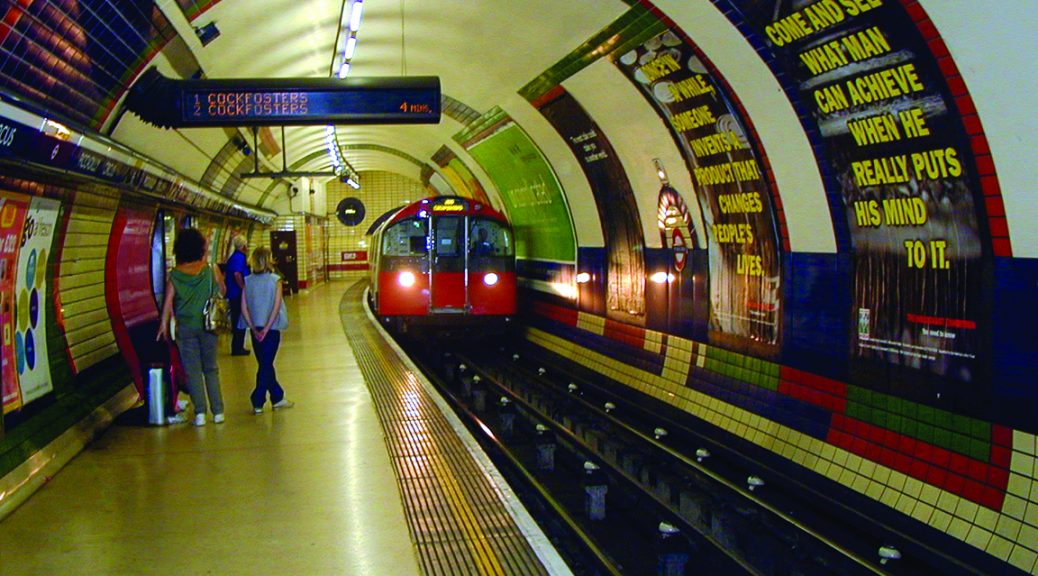
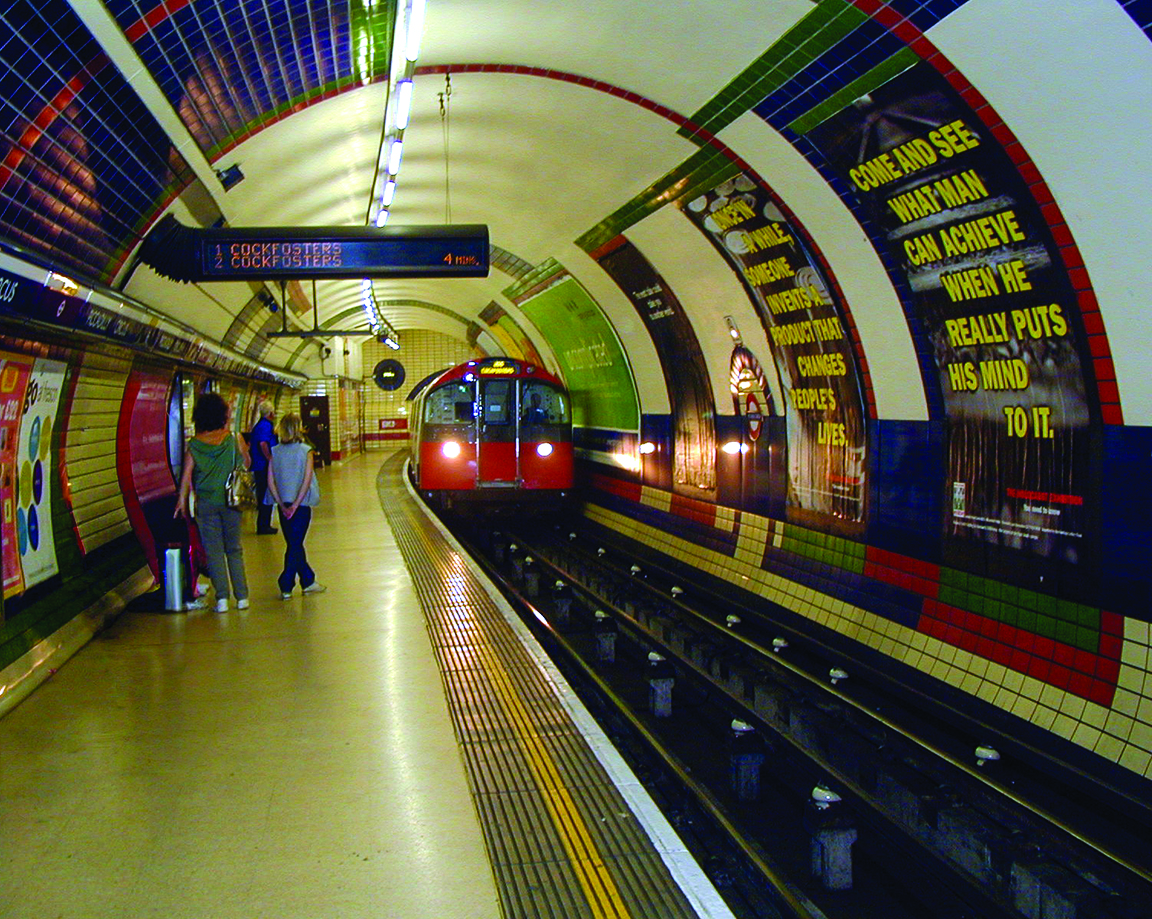
London’s Underground is Europe’s largest subway system, with about 402 kilometers or 250 miles of working track.
I’m partial to London’s system, mostly because of its sometimes confusing layout, the residue of multiple competing lines first begun in 1863.
That is just a couple of miles more than New York’s subway. And our hometown system, the “T” in Boston, is America’s oldest, first operating in 1897.
All three, though, are dwarfed in size by the much younger Shanghai Metro and the Beijing Subway.
Breaking the Ice
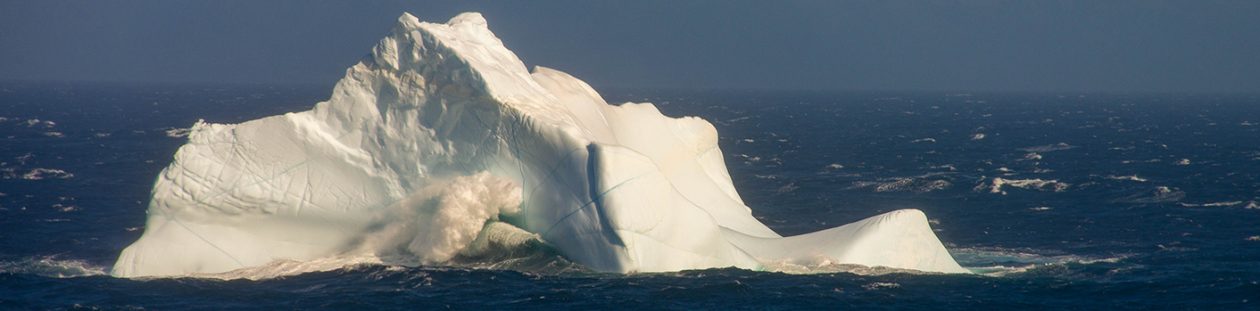
Researching one of my books, “Henry Hudson: Dreams and Obsession”, I ventured into the North of Canada to Ungava Bay, Nunavik, Nunavut, Hudson Bay, and James Bay.
I traveled on an obscure airline to a gravel landing strip in Kuujjuaq at the mouth of the Koksoak River on the southern side of Ungava Bay at the top of the Labrador Peninsula. The very large very remote bay is east of gigantic Hudson Bay.
Ungava connects to Hudson Strait and from there east to the Arctic Sea, which is the northern extent of the Atlantic Ocean.
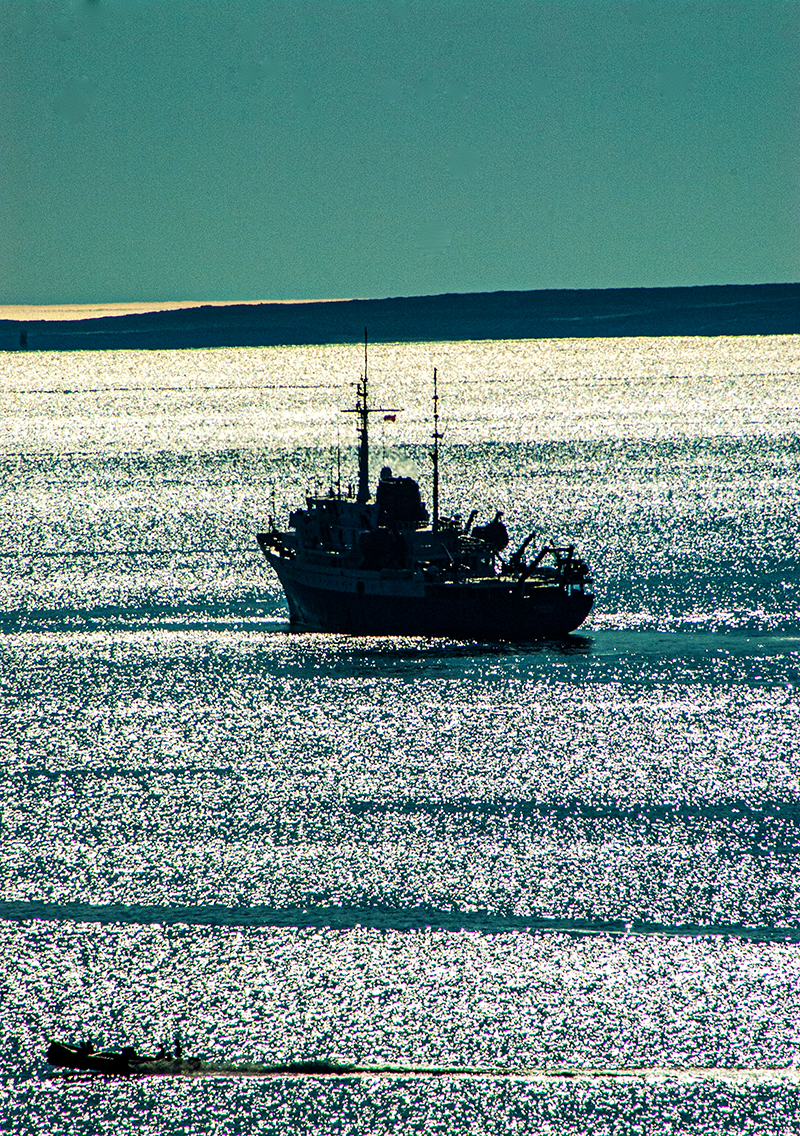
Ungava Bay has some of the largest tidal ranges in the world, often more than 30 to 50 feet of rise and fall per day. And the water level of the bay drops to mudflats at low tide; indeed, we ran aground in the mud as we began to exit the bay and had to wait for the tide to return before we could enter Hudson Strait.
The Hike I Did Not Take
Ny-Ålesund, in the Svalbard Archipelago, at 78°55′N, is one of the northernmost occupied places in the world, home to about 100 scientists in the brief summer and a smaller number in the cold, dark winter.
It was founded as a mining town in 1916, part of the very unusual history of this very unusual place. There was–still is–abundant coal in Svalbard, but digging for it and transporting it to market in Europe do not make economic sense. And we’ve done enough damage to our planet with coal and oil already.
I came to Ny-Ålesund on an unusual vessel about 20 years ago. Not an icebreaker, not an expedition ship, but instead aboard a small luxury cruise ship. Access to this environmentally fragile part of the world has since been greatly tightened.
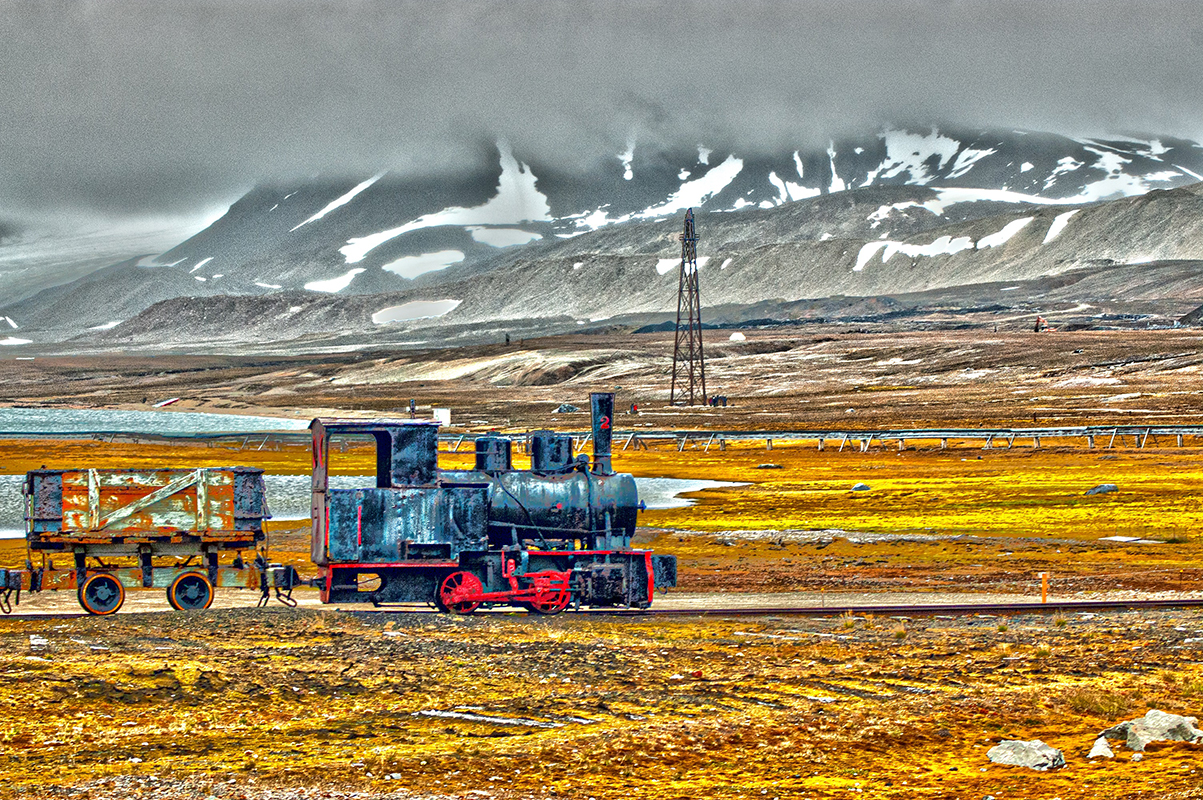
When we came ashore by ship’s tenders I visited some of the scientific outposts, and then I came across an old steam locomotive that had been used to haul coal from the mines along the mountainside to loading platforms for ships.
In the distance I spotted a rusting steel tower. From my own research I knew immediately that it was a remnant of the settlement’s other history: a setting-off point for some of the great aerial explorations to the North Pole.
On May 11, 1926, the Norwegian adventurer Roald Amundsen, along with Italian airship designed Umberto Nobile, successfully took off from Ny-Ålesund in the airship Norge, crossing over the geographic North Pole and eventually landing in Teller, Alaska.
Two year later, Nobile took off from the same mooring tower aboard the airship Italia, reaching the North Pole; on the return trip the airship crashed and a huge international effort was launched to try and rescue Nobile and his crew. Roald Amundsen took off in a seaplane in an attempt to save his friend Nobile, but his aircraft disappeared and was never found.
As I replayed that story in my head, I began to walk toward the mooring tower. A sentry with a serious long gun came up to stop me: “You don’t want to go there,” he told me. “A mama Polar Bear and her cubs are there now.”
I retreated.
Sideways on the River
We made our way from the Atlantic Ocean to Manaus down the navigable main channel of the mighty Amazon River. As it happened it was Carnival time in Brazil, a long period of partying leading up to Easter.
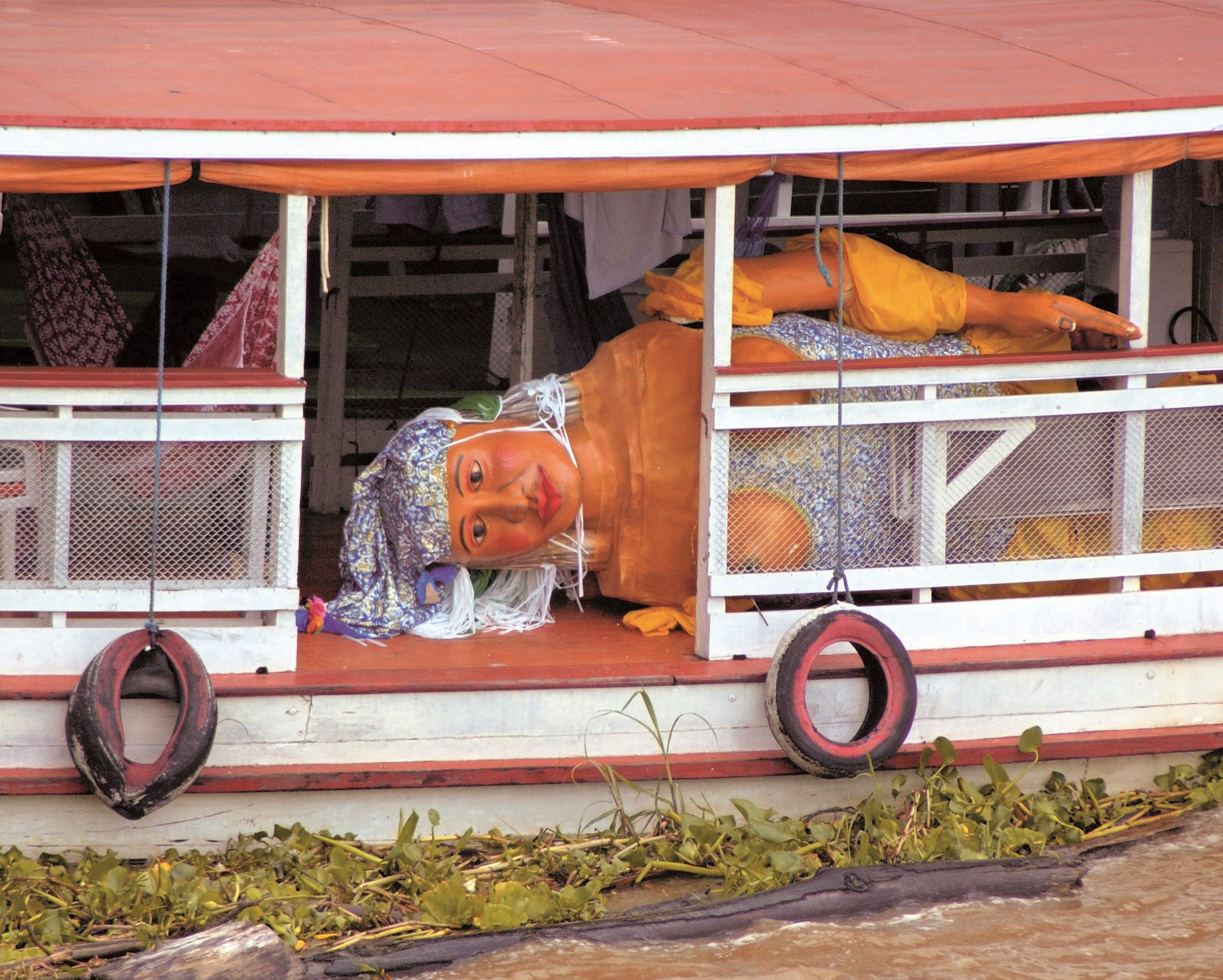
In nearly every tiny settlement we visited they were either celebrating or making plans for a celebration. Most Carnaval parades in Brazil (and many other places) traditional feature big-head puppet-like creatures.
They call them carros alegóricos, literally allegorical floats.
But not every little place in Brazil can afford its own Carnival big heads for a parade. So they do the next best thing, using small Amazon River packet boats to move them from one town to another as they were needed.
All text and photos are by Corey Sandler, all rights reserved. Copyright 2026. If you want to obtain a copy of one of my photographs for personal or commercial use, please contact me using the link on this page.
If you’d like to order a copy of my book, “Henry Hudson Dreams and Obsession” you can obtain a Kindle or PDF version by clicking here: HENRY HUDSON DREAMS AND OBSESSION
Or if you would prefer to purchase a printed book in hardcover or paperback (personally autographed if you’d like) please send me an email for details. Click here to contact me.