
By Corey Sandler
We returned mid-June from a six-week meander in the North Sea and the Baltic. The waters were calm, weather mostly copacetic with a few notably wet exceptions, and the locals always welcoming.
It wasn’t always so in this part of the world.
Almost everywhere we went was deeply involved in World War Ii, the Cold War that followed, and whatever historians will end up labeling the parlous times in which we now live.
We began in Bergen on Norway’s west coast. The country’s second-largest city is an interesting place but most certainly not a European airline hub.
It’s not that you can’t get there from wherever you start, but coming from North America you’re all but guaranteed to have to change planes somewhere in the middle of the night.
We’ve flown into Flesland Airport many times, but it is still a bleary-eyed jolt to exit the terminal and behold the big sign on the canyon wall across the road.
It reads: “BERGEN?”
As in really? Are you sure?
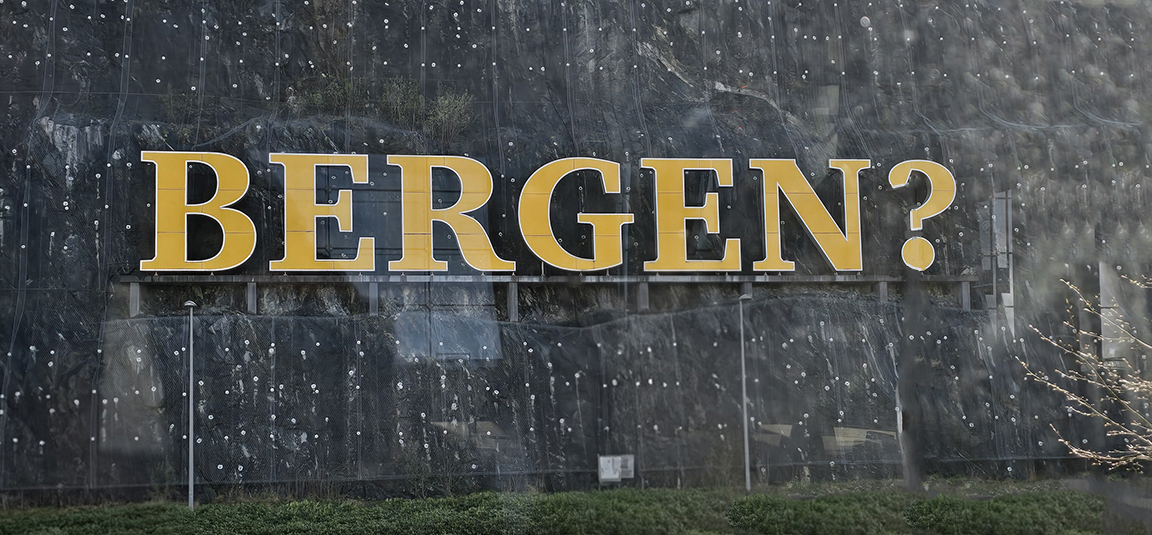
The sign was installed in 2017, and the artists achieved the goal of evoking a response.
Norwegian humor is sometimes described as dry. But that cannot reasonably be applied to Bergensere, the residents of Bergen.
The city is one of the wettest places in all of Europe, with rain recorded—on average—about 240 days of each year. In other words, you have a two-out-of-three chance of non-sunshine on any particular day.
There’s a reason: moist air traveling north in a finger of the Gulf Stream gets blown inland toward the cold mountains of Norway and comes to earth as rain.
I can conduct a quick visual census by looking at my collection of photos from Bergen; across dozens of visits, blue skies are—to use a Norwegian expression—like ugler i mosen. Like owls in the moss. Quite out of place.
Bergen, Stavanger, and Kristiansand were the first parts of Norway seized and occupied by Germany as it began to expand into Scandinavia; Oslo held out for a few days longer while the national government and the royal family evacuated.
Bergen suffered significant damage from Allied assaults against German installations, including U-boat pens. And a large part of the ancient heart of the city was destroyed when a German supply ship loaded with 273,000 pounds of explosives blew up in April 1944.
The ship’s name was Voorbode, a steam trawler seized from the Dutch. Voorbode means “harbinger.” Strictly speaking, that means someone who fortells or announces that something is about to happen; in modern usage it has come to suggest a harbinger of bad news.
Stavanger: Norway’s Split Personality On Display‽
If Bergen warrants a question mark after its name, the city of Stavanger to its south is a prime candidate for proper use of an interrobang.
A what?
An interrobang is a symbol for a quizzical or rhetorical question mark, a combination of exclamation and puzzlement. Like this: ‽
I hereby affix my name to the petition to add the interrobang to the global alphabet; we need it more than ever these days.
Stavanger, south of Bergen, is a handsome city with a split personality.
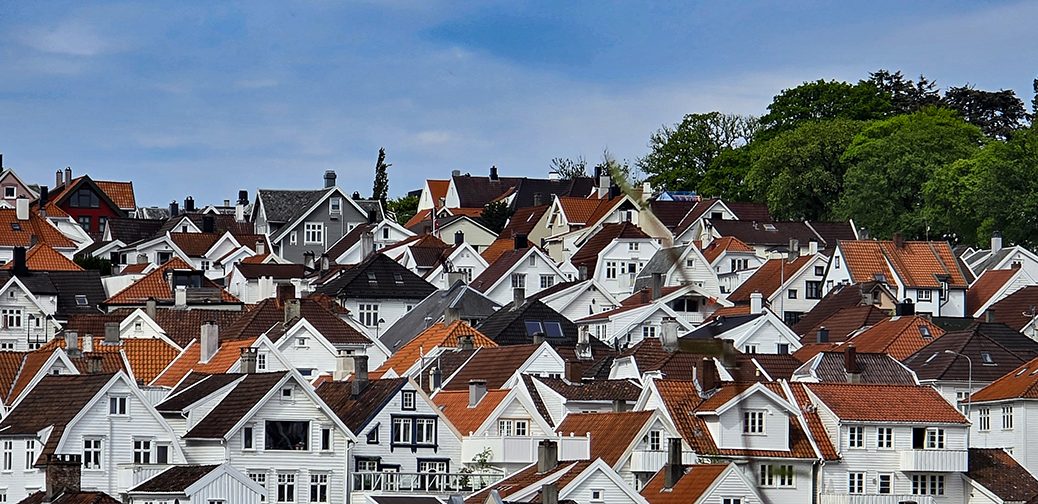
On one side of the horseshoe harbor is the old town, made up of meticulously maintained wooden homes and small businesses that harken back to Stavanger’s heyday as one of the country’s leading fishing ports. Processing and canning factories put herring and other fish into tins which were shipped around the world.
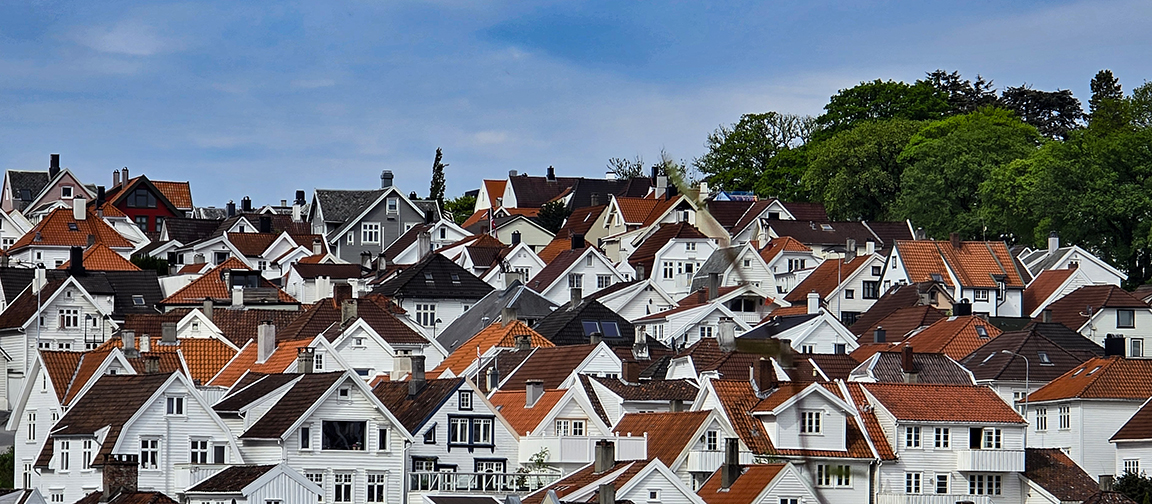
Today Stavanger is one of the most prosperous (and expensive) places in the country, the center of its oil industry offshore in the North Sea. Norwegians have benefited greatly from extraction of oil and gas, even as its people and government proclaim a goal of clean, renewable energy.
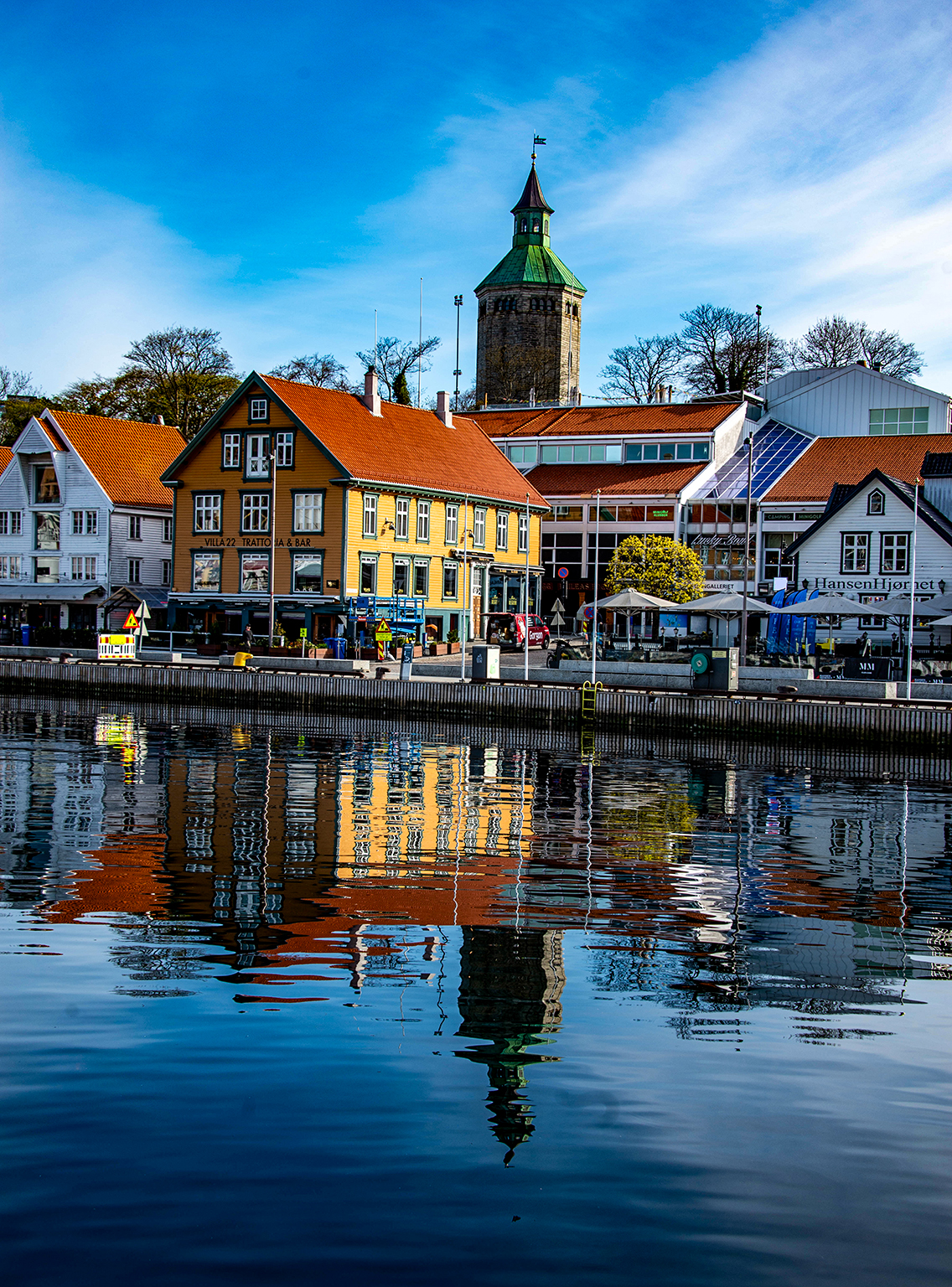
The other side of the harbor is mostly home to offices and government agencies, and a surprisingly enlightening Museum of Petroleum, an encomium I never expected to commit to utter.
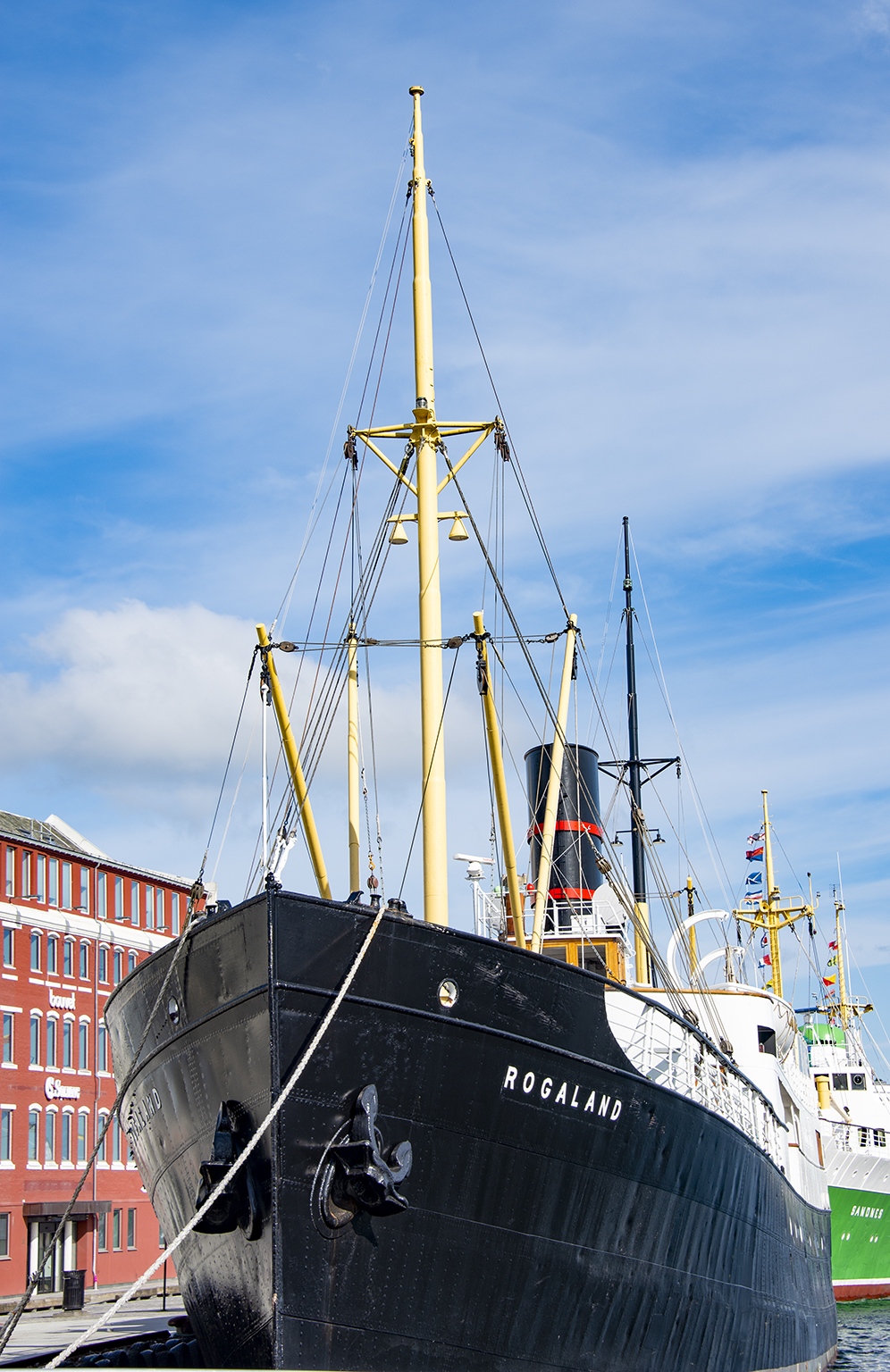
Also in the harbor is the restored MS Rogaland, built in 1929 in Stavanger as a cargo ship. Seized by Germany with the outbreak of World War II, it was in the harbor at Bergen when Voorbode exploded.
Rogaland was recovered from the harbor bottom after the war and restored. It was returned to service, working into the 1990s. It now serves as a museum ship in its original port of Stavanger.
Norway earns about 20 percent of its GDP from the sale of oil and gas, although almost none of the petroleum products harvested offshore are used at home.
The country gets nearly 99 percent of its energy from hydroelectric power plants, and while we were in the country they celebrated the registration of the one-millionth electric vehicle in a country with a population of about 5.5 million.
Norway places most of the proceeds from the export of fossil fuel into the world’s largest single sovereign wealth fund, and scarcely touches those funds. The idea is to have a piggy bank for today’s grandchildren and their grandchildren.
Today’s extensive social welfare services in Norway are financed by high taxes; in return Norwegians receive health care, education, pensions, and according to many surveys one of the world’s highest levels of happiness.
Gdańsk: Where War Began
We continued down and around the bottom of Norway and about a week later we visited Gdańsk, Poland.
Gdańsk, or Danzig as it was known in the 1920s and 1930s, was a festering sore held over from the first World War.
When World War II began, Gdańsk saw some of the most horrible acts of the Holocaust and some of the most brutal ethnic-based wartime fighting.
In more recent times, it was the place where workers started toppling the dominoes that led to the fall of the Soviet Union.
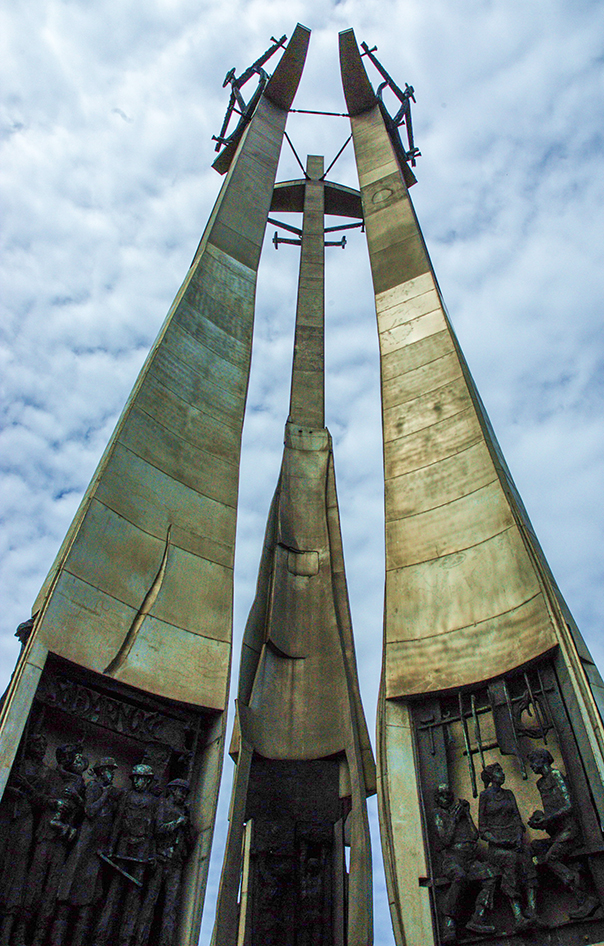
A place of beginnings and endings.
In the 1919 Treaty of Versailles the United States, Great Britain, France, and other allies imposed punitive terms on defeated nations.
Germany was made to give up West Prussia to newly reconstructed Poland.
Gdańsk, an overwhelmingly ethnically German city, was made the “Free City of Danzig,” jointly administered by the new League of Nations and Poland.
The “Polish Corridor” gave access to the sea at Danzig. And Germany was split.
National Socialists won the most seats in 1932 German elections, and Hitler was made chancellor in early 1933.
In 1934, a plebescite—not considered free or fair—granted him the title and power of Fuhrer.
He ran a campaign of scapegoating and retribution, demanding the return of Danzig and railroad access across the Polish Corridor to Germany’s exclave at East Prussia.
In 1938, Germany annexed Austria, and in March 1939 invaded Czechoslovakia also taking Klaipeda in Lithuania.
Europe’s reaction was appeasement.
In September 1938, British Prime Minister Neville Chamberlain promised “peace for our time” with the Munich Pact.
In March 1939, Germany violated the pact, occupying Czech regions of Bohemia and Moravia. In response, Britain and France guaranteed Polish integrity.
On August 23, Germany and the Soviet Union signed a non-aggression treaty, colloquially named after Soviet foreign minister Vyacheslav Molotov and German foreign minister Joachim von Ribbentrop.
Historians generally agree neither side expected the deal to last, and fully expected one day to be fighting each other.
But in the short-term, the Molotov-Ribbentrop Pact led to German advances eastward into Poland, and Soviet advances westward into the Baltic States.
Just over after the signing of the pact, at 4:45 in the morning on September 1, 1939, the German battleship Schleswig-Holstein opened fire on a small Polish garrison at Westerplatte.
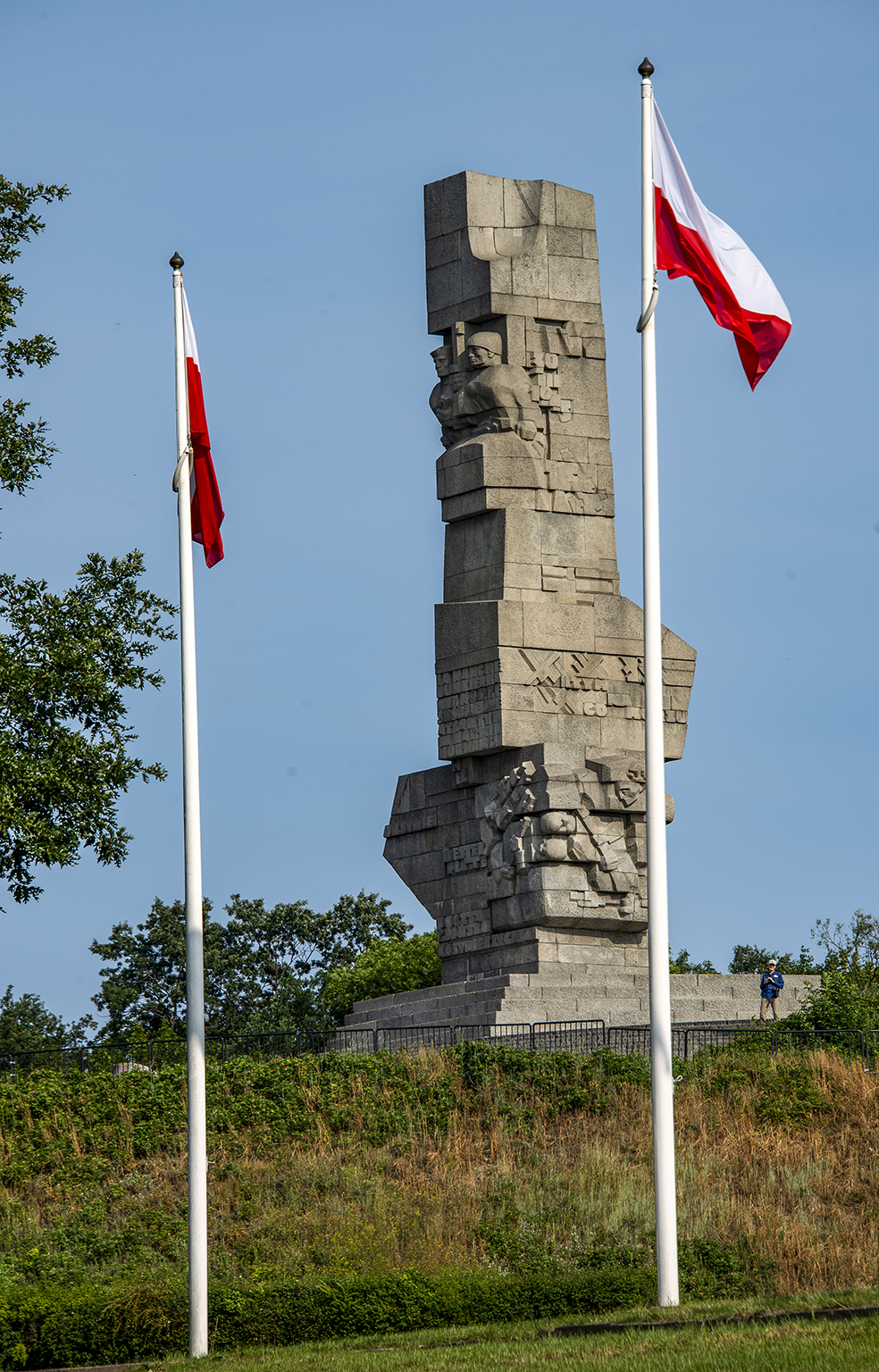
Two days later Britain and France declared war on Germany. Within two weeks Warsaw and most of western Poland had fallen to Germany.
Today, Poland has two significant areas of concern: to the east and southeast is Ukraine, under attack by Russia for the past four years.
Poland has provided military and economic support to Ukraine from the start of the war, and it is also one of the primary means of access for supplies into the region. And Poland has also accepted about one million refugees from Ukraine.
Next month, I’ll continue this tour of the Baltic with our visits to Denmark, Estonia, and Germany.
All text and photos are by Corey Sandler, all rights reserved. Copyright 2026. If you want to obtain a copy of one of my photographs for personal or commercial use, please contact me using the link on this page.
If you’d like to order a copy of my book, “Henry Hudson Dreams and Obsession” you can obtain a Kindle or PDF version by clicking here: HENRY HUDSON DREAMS AND OBSESSION
Or if you would prefer to purchase a printed book in hardcover or paperback (personally autographed if you’d like) please send me an email for details. Click here to contact me.